“The development of full artificial intelligence could spell the end of the human race….It would take off on its own, and re-design itself at an ever increasing rate. Humans, who are limited by slow biological evolution, couldn’t compete, and would be superseded.”
— Stephen Hawking
WHAT IS ARTIFICIAL INTELLIGENCE…?
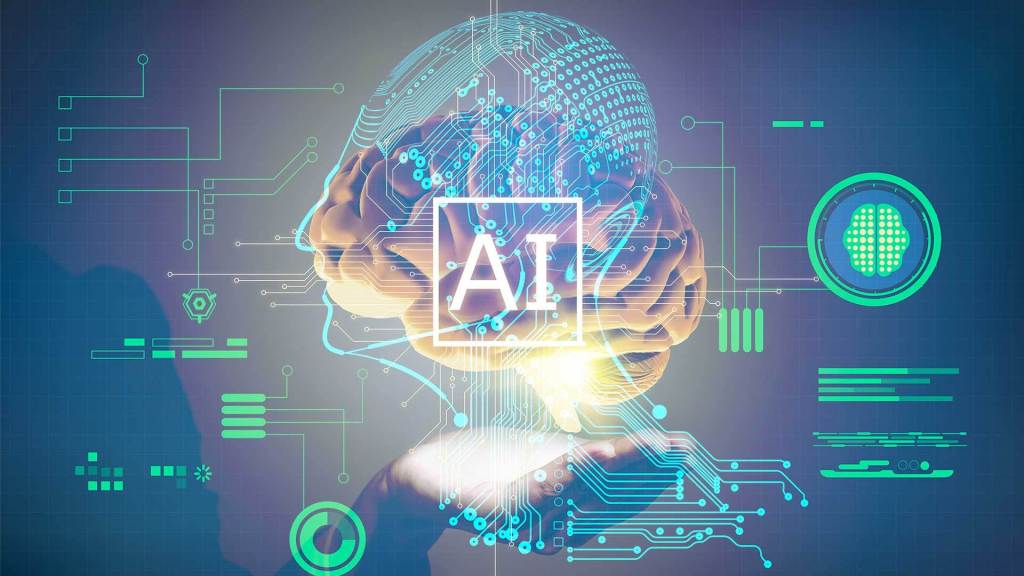
Artificial intelligence (AI) is the simulation of human intelligence processes by machines, especially computer systems. Specific applications of AI include expert system, natural language processing (NLP), speech recognition and machine vision.
INTRODUCTION:
“The science and engineering of making intelligent machines, especially intelligent computer programs”.
-John McCarthy-
In order to define and understand artificial intelligence first we should understand the concept of intelligence in general.
“Intelligence can be generally described as the ability to perceive information, and retain it as knowledge to be applied towards adaptive behaviors within an environment or context.”
By this we can say that AI can be defined as intelligence exhibited by machines. AI can also be defined as the method to develop the computer, a robot or a product to think as smart as humans. AI is a branch where computers are developed to think as human brains, work like humans or more precisely we can say that computers or robots are made to act exactly like humans where it tries to solve problems. Generally AI is made up of certain objectives like reasoning, representation of knowledge, planning to solve the problems, learning things, processing of natural language and ability to do things and manipulate objects and many more.
In the near future, the human social environment worldwide might be populated by humanoid robots. The way we perceive these new social agents could depend on basic social psychological processes. People of different age, sex, culture, upbringing, workplace environment, education might have different views and perspective about robots. Although, people’s attitudes are shifting on the acceptance of robots as workplace assistants. Research shows the more exposure to robots we have, the more we feel positively about them. Furthermore, people’s perceptions became more positive when given information about rights-bearing non-human entities or myth-refuting statements. The style used to introduce AI and robot rights significantly affected how the participants perceived the proposal. People more familiar with social robots and with more positive attitudes towards them evaluate robots with human traits more highly. Social perception of such artificial partners may be strongly biased by people’s attitudes, which causes these robots to be perceived not as an ordinary machine, but as a social being. Human perception of social robots resembles social phenomena related to human perception of other people.
General prescription of people about Robots
Roughly half of all the robots in the world are in Asia, 32% in Europe, and 16% in North America, 1% in Australasia and 1% in Africa. 40% of all the robots in the world are in Japan, making Japan the country with the highest number of robots.

In the near future, the human social environment worldwide might be populated by humanoid robots. The way we perceive these new social agents could depend on basic social psychological processes. People of different age, sex, culture, upbringing, workplace environment, education might have different views and perspective about robots. Although, people’s attitudes are shifting on the acceptance of robots as workplace assistants. Research shows the more exposure to robots we have, the more we feel positively about them. Furthermore, people’s perceptions became more positive when given information about rights-bearing non-human entities or myth-refuting statements. The style used to introduce AI and robot rights significantly affected how the participants perceived the proposal. People more familiar with social robots and with more positive attitudes towards them evaluate robots with human traits more highly. Social perception of such artificial partners may be strongly biased by people’s attitudes, which causes these robots to be perceived not as an ordinary machine, but as a social being. Human perception of social robots resembles social phenomena related to human perception of other people.
• Autonomy and ethical question
As robots have become more advanced and sophisticated, experts and academics have increasingly explored the questions of what ethics might govern robots’ behavior, and whether robots might be able to claim any kind of social, cultural, ethical or legal rights. One scientific team has said that it is possible that a robot brain will exist by 2019. Others predict robot intelligence breakthroughs by 2050. Recent advances have made robotic behavior more sophisticated. The social impact of intelligent robots is subject of a 2010 documentary film called Plug & Pray.
• Military robots
Some experts and academics have questioned the use of robots for military combat, especially when such robots are given some degree of autonomous functions. There are also concerns about technology which might allow some armed robots to be controlled mainly by other robots. The US Navy has funded a report which indicates that, as military robots become more complex, there should be greater attention to implications of their ability to make autonomous decisions. One researcher states that autonomous robots might be more humane, as they could make decisions more effectively.
What is the scope of Artificial Intelligence?
AI has been used for many purposes :
AI IN HEALTHCARE:

The medical field is also using AI technology for its advancement . AI is helping many medical researchers in many useful ways
AI IN CYBERSECURITY:

The future application of AI in cybersecurity will ensure in curbing hackers. The incidence of cybercrime is an issue that has been escalating over the years. It costs enterprises in terms of brand image as well as material cost.
AI IN SCIENCE:
The scope of AI in science is the largest. Recently ‘Eve’ was in the news for discovering that an ingredient found commonly in toothpaste, is capable of curing Malaria.
AI IN TRANSPORTATION:
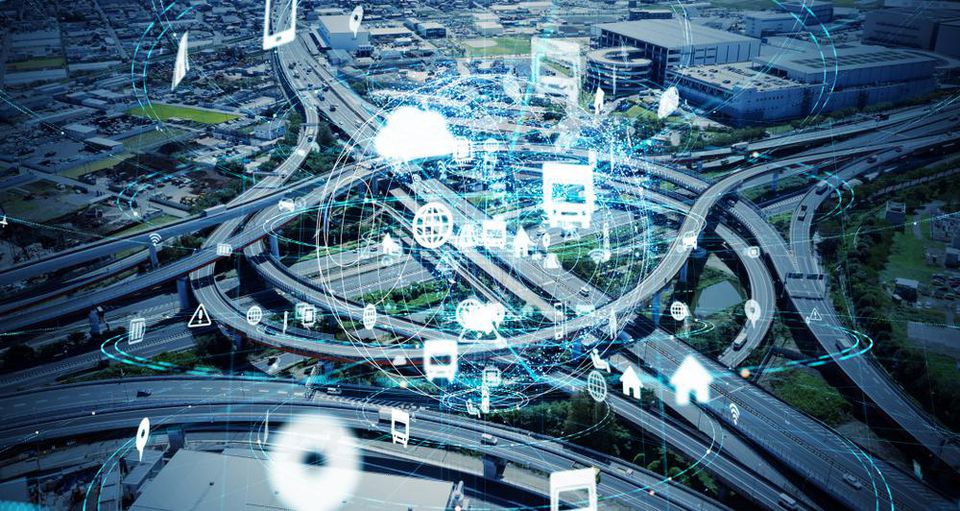
Self- driving cars have already populated the market, however, a driver is required at the wheels for safety purposes. With Google, Uber, and General Motors trying to establish themselves at the top in this market, it will not be long before driverless vehicles become a reality.
AI IN DATA ANALYTICS:
AI would be able to perceive patterns in data that humans cannot. This enables businesses’ to target the right customers for the product. An example of this is the partnership between IBM and Fluid
What is the difference between Artificial Intelligence and Emotional Intelligence
The well-known author and spiritual authority Amit Ray said recently that as more and more artificial intelligence comes into play in the business environment, we must infuse our corporate leadership skills with corresponding amounts of emotional intelligence. At gap intelligence, we are recognizing more and more the vital role emotional intelligence plays in our business dealings, while at the same acknowledging the benefits in efficiency brought about by automation.
This is a unique time to have grown up, amid movies like The Terminator, 2001 A Space Odyssey, Total Recall, and The Matrix (just to name a few). All were films set in the future, and all contained a vision of artificial intelligence and how it could disrupt, shape, and ultimately destroy humanity. These movies painted a picture of seemingly distant worlds that we could never imagine experiencing in our lifetime.
Cut to 2020, and the future is here—”Forresters forecast that cognitive technologies such as robots, artificial intelligence (AI), machine learning, and automation will replace 7% of US jobs by 2025.”
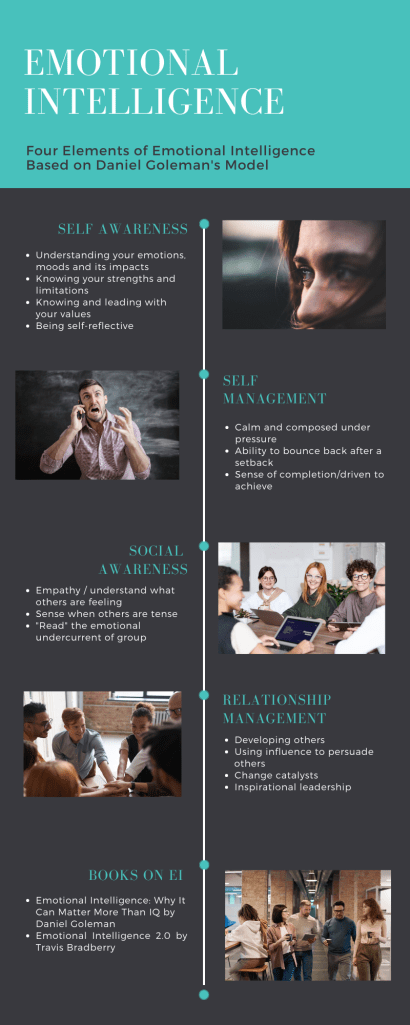
I feel confident that gap intelligence will be able to weather the tumultuous storm building at this very moment in history as a result of the coronavirus pandemic. We’re fortunate to have a leader who is committed to living our values every day and who inspires the rest of us toward a common vision. Our vision will help to shield us from many of the economic consequences of the pandemic’s global upheaval. And once the dust settles and things assume some semblance of normality, our vision will help us adapt to the technological advances that are inevitably coming. We will be successful going forward because we will adopt new technologies while recognizing that our EQ capabilities are what differentiates ourselves from the mere machines.
Members who worked on this blog:
- Ananya s m
- Shilpi Prasad
- Koushik G
- Gowthan Patel P
- Granthika Dhanuka
- Shawan Mondal
- Gnanendra Kumar T
- Mohammed Azeez
 ARTIFICIAL INTELLIGENCE
Superb blog
LikeLiked by 2 people
Thanks bro
LikeLike
informative!!😊😊
LikeLiked by 1 person
Informative 👍👍👏👏
LikeLiked by 1 person
Good subject and all the best . The way you people designed the blog is wonderful.
LikeLiked by 1 person
Thanx bro
LikeLiked by 1 person
Informative 💞✨🙌🏻
LikeLike